
How to get rid of screens at mealtimes?
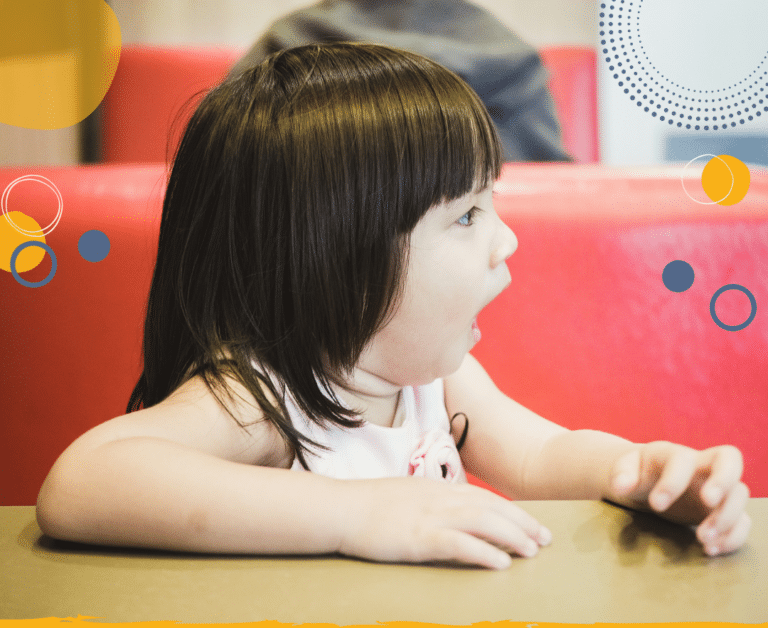
“I struggle to get my 3-year-old to eat nicely without resorting to a screen at the table (either my phone or her tablet). She won’t sit still, gets up and runs around and will only pick at her food. If I try to make her stay at the table, she whines for her tablet and gets upset until I give in. I know I shouldn’t be using screens to keep her quiet all the time – any advice on how to change things?”
Lots of parents turn to screens at mealtimes as a way to keep children sitting still long enough to eat. It’s a quick (and often successful) fix. But over time the screen can become a prop that’s hard to remove.
When children always have screens at mealtimes, they don’t learn the skills needed for screen-free meals. And they miss out on the many benefits shared family mealtimes can bring.
Research consistently shows that when families avoid screens at mealtimes, children are more likely to notice their hunger and fullness cues, try a wider variety of foods, and practise important social skills like conversation and turn-taking. Shared meals also give children valuable opportunities for connecting with parents and siblings and building a sense of family identity and belonging.
The skills that screen-free meals require (such as sitting, waiting, eating, and coping with boredom) are useful for many other areas of toddlers’ and pre-schoolers’ lives. So, rather than thinking of removing the screen as simply taking something away, it might help to approach it as skill building and teaching a new routine.
Here are some ways to get started.
Practise the skill of sitting at the table
For a three-year-old, sitting at a table for an entire meal can be quite demanding. It requires impulse control, patience and body awareness – all skills that are still developing.
One way to help would be to practise short bursts of sitting still outside mealtimes. You might play quick table games, do a puzzle together, or share a short snack while chatting.
Think of it like building a muscle: the more your child practises sitting and staying, the easier it becomes when dinner arrives.
Model the behaviour you want to see
Children notice what adults do at the table. If we’re checking messages or scrolling through our phones, it sends a mixed message about screens.
Put your own phone out of reach and be present for her. This reinforces the idea that mealtimes are for connecting with each other.
Offer engaging alternatives to screens
If the tablet disappears but nothing replaces it, the table will feel very dull. Instead, try adding small, low-key activities that keep her busy and engaged without taking attention away from food.
You could consider:
- Imaginative conversation prompts (“What would happen if rain was made of chocolate?”)
- Word games like “I spy”
- A small basket of quiet table toys
- Getting children involved in helping to serve food
The aim isn’t to entertain your child constantly, but to make the table feel like an interesting place to be, not a battleground.
Start small
It’s tempting to aim for a perfectly behaved, screen-free family dinner straight away. But a gradual approach often works better.
You might start with one short meal a day without screens or aim for the first 5–10 minutes of the meal screen-free. Once your child gets used to the new routine, you can slowly extend the screen-free time.
Stick to meals at home to start with (until those new skills get established) rather than risking an unpleasant battle in public that might knock your confidence.
Set clear ground rules about screens at mealtimes
Once you decide to make a change, it helps to be clear and consistent. Set some ground rules. You might say something like: “From now on, we’re not using screens at dinner time. Phones and tablets stay off the table and we keep our bottoms on the chair while we eat.”
Expect some protest at first. Your daughter has learned that asking long enough eventually brings the tablet back. Staying calm and consistent will help the new rule stick.
Use praise and positive reinforcement
When children are learning a new behaviour, noticing the small successes makes a big difference. Children tend to repeat behaviour that gets our attention so direct your attention at what she is getting right, with lots of warmth, smiles and praise. “I love sitting with you at the table!”
Positive attention helps children understand what you want more of and often works better than focusing on what they’re doing wrong. Tell a silly joke or make a silly face for every piece of food she puts in her mouth, and she’ll be whizzing through her dinner in no time.
A final thought
Changing a routine that has become a habit rarely happens overnight. Your daughter may complain, wander off, or ask repeatedly for her tablet at first. That doesn’t mean you’re doing anything wrong, it simply means she’s adjusting.
With patience, consistency and a bit of creativity, most children quickly adapt to a new rhythm. And many families find that once screens at mealtimes disappear, something lovely takes their place: conversation, laughter and the simple pleasure of eating together.
Do you have a parenting question you’d like answered on the blog? Feel free to get in touch.
*This post contains affiliate links. That means that if you click through from this post and make a purchase, the Positive Parenting Project will receive a small commission. There is no additional charge to you. This helps us to keep providing free content for our readers. For more info, see Disclosure Notice.


Leave a Reply