
12 Best Books for Toddlers for Learning and Development
Choosing books for toddlers is not just about finding an engaging story. The best books for toddlers support fine motor skills, hand-eye coordination, sensory development, attention and early language skills – all through simple, enjoyable interactions.
The 12 books in this first library have been chosen because they invite children to touch, lift, press, point, listen and make connections between pictures, sounds and words. They also give parents easy, playful ways to support learning and development during everyday story time.
*This post contains affiliate links
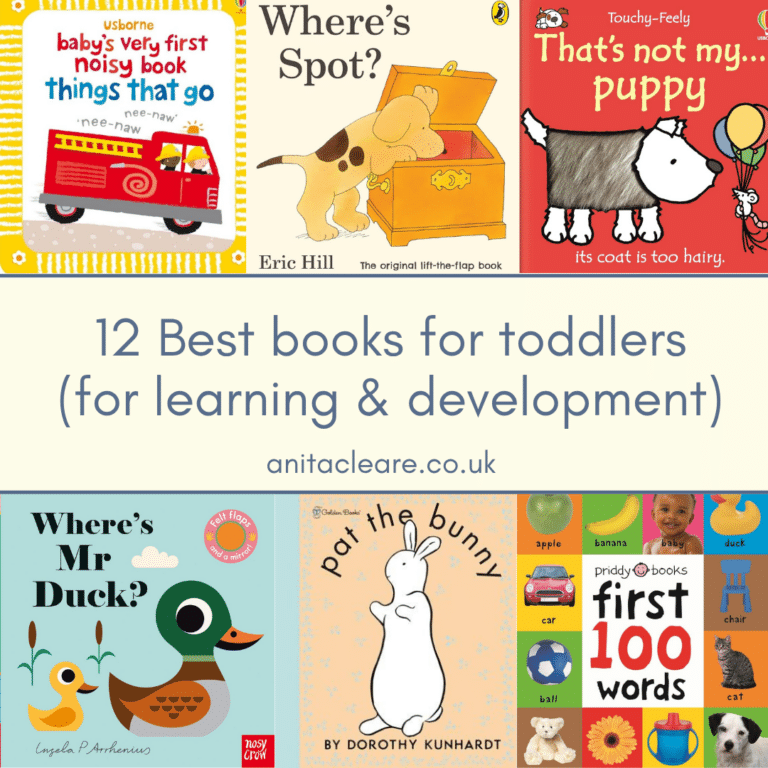
Baby’s Very First Noisy Book (Usborne)
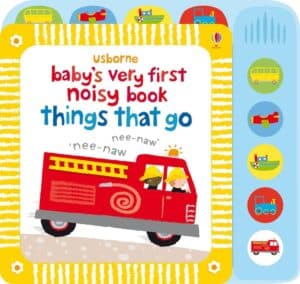 This is a bold, bright book for babies containing beautifully designed high-contrast images of vehicles that are easy for even young babies to focus on plus a sound panel to bring the pictures to life.
Interactivity is a lovely introduction to cause-and-effect learning. Pressing the sound buttons gives babies a purposeful reason to reach, locate and press, supporting early hand-eye coordination and finger control. Hearing a sound alongside its picture helps build connections between what children see, hear and eventually name. The repeated interaction also encourages children to anticipate what will happen next (an important foundation for early learning and communication). And because they are likely to encounter vehicles in the real world, this book supports conversations while out and about too.
Noisy Farm (Usborne)
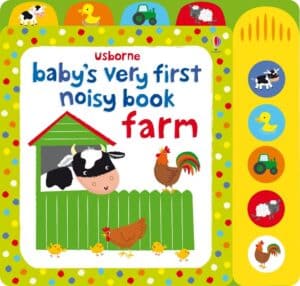 It’s a peaceful morning on the farm, but things are about to get noisy. And if there is one thing that toddlers love, it’s getting noisy!
From the same Usborne series, this book similarly brings together three powerful early-learning experiences: looking, touching and listening. Children explore textures while hearing familiar farm sounds, helping them begin to connect an animal with its appearance, feel and sound. Pressing sound mechanisms also provides finger practice and pointing. For adults, it creates easy opportunities to pause, name the animal and imitate the sound together (and to have a lot of fun!).
That’s Not My Puppy (Usborne)
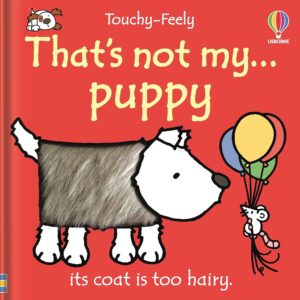 Babies and toddlers will love touching the textured patches in this book as they meet puppies with fluffy tails, shaggy ears and bumpy paws.
This book turns sensory exploration into early learning. Stroking, pressing and feeling different textures encourages toddlers to use their fingers deliberately while developing sensory awareness. The repeated language gives children a predictable pattern to listen to and join in with, helping connect words such as “fluffy” or “bumpy” with what they can actually feel. It is a simple, engaging way to build both fine motor and language skills.
That’s Not My Dinosaur (Usborne)
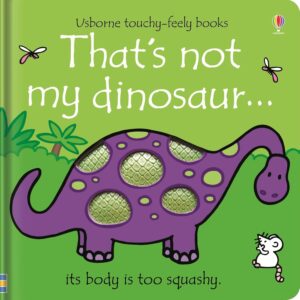 If you like the touch-and-feel format and have a dinosaur-obsessed toddler (I speak from experience!), you’ll love the five friendly dinosaurs in this special edition of the much-loved ‘That’s not my…’ books.
A great choice for combining tactile exploration with early vocabulary. Children are encouraged to touch and explore different textures while looking closely at bright illustrations. Those small actions – reaching, touching, stroking and pointing – give little hands useful practice, while the bright colours make it easy for adults to extend the talk into learning colours too. The repetitive text encourages toddlers to anticipate and participate in the pattern. Gorgeously squishy touchy-feely book!
Where’s Spot (Eric Hill)
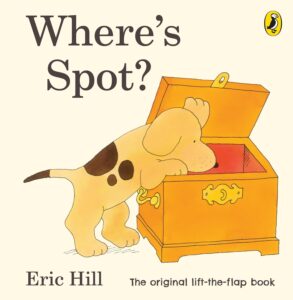 You might remember lift-the-flap Spot books from your own childhood! Spot has been a trusted character in early learning for over 40 years, selling over 65 million books worldwide, and an absolute must have in a toddler’s first library.
Lift-the-flap books offer children a wonderfully simple reason to use their hands and support older babies to understand object permanence (that things exist even when you can’t see them). In Where’s Spot?, grasping the flaps provides repeated practice in fine-motor control, while searching for Spot encourages visual attention and hand-eye coordination. Its predictable question-and-answer structure is an essential feature in all of the best books for toddlers, supporting early language and helping children connect the words they hear with the people, animals and objects they discover.
Dear Zoo (Rod Campbell)
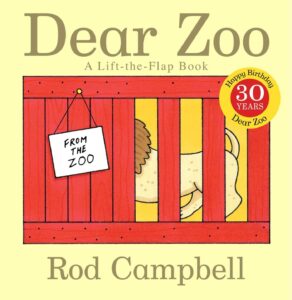 Another old favourite that deserves a place in every toddler’s first library. Little ones will love this touch-and-feel edition of the bestselling pre-school classic Dear Zoo.
The flaps engage children’s memory (Can you remember which animal is hiding underneath?) while the selection of animals give lots of opportunity for adults to get creative in their animal noises (roaring and hissing). Aling with the physical anchor of lifting the flaps, this naturally supports developing links between pictures, words, memory and anticipation (as well as providing some lovely bonding moments).
First 100 Words (Roger Priddy)
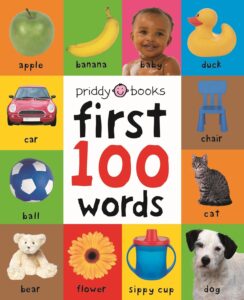 Discover 100 essential words for your little one’s growing vocabulary with this oversized padded board book.
In early language development, repetition really matters. First 100 Words gives children clear photographs and simple labels, making it easy to build picture-word associations through shared reading. Pointing, turning the sturdy board pages and searching for familiar objects also provide useful practice for developing hands.
Adults can make the book more interactive by asking children to find, point to or name objects, and by chatting about the objects to gradually move from recognition towards independent language. You might also like the rest of the First 100 series (animals, numbers, colours, shapes) by Roger Priddy too.
Pat the Bunny (Dorothy Kunhardt)
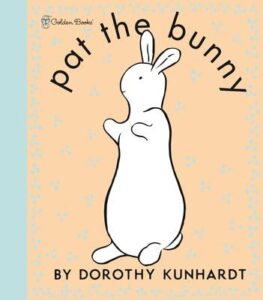 This timeless children’s classic has been a traditional first book for generations. A perfect gift for new babies, baby showers, and first birthdays!
One of the best things about Pat the Bunny is that children are invited to do things, not simply look. Patting, touching, pointing and interacting with the pages give little hands meaningful opportunities to practise controlled movements. These simple actions can be paired with language and imitation, helping children connect an instruction with an action. It also makes shared reading a genuinely enjoyable interactive experience between child and adult. The full boxset also includes Pat the Puppy and Pat the Cat.
Where’s Mr Duck? (Ingela P. Arrhenius)
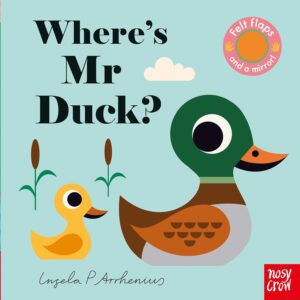 Just look at those huge eyes! Captivating artwork, toddler-proof flaps and a mirror finale – the magic formula of the popular Felt Flaps series.
Where’s Mr Duck is perfect for toddlers. The felt flaps are particularly satisfying for little hands because they are easy to find, grasp and move. Searching for Mr Duck encourages children to look carefully, reach and manipulate the flap. The repeated hiding-and-finding game also gives adults natural opportunities to introduce words, encourage pointing and build anticipation, helping children to connect what they see and do with the words being used.
Where’s Mr Lion? (Ingela P. Arrhenius)
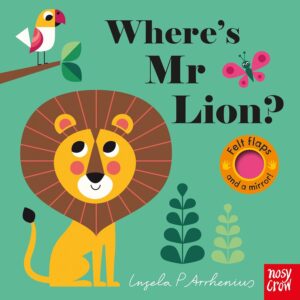 If you are going to buy one, then buy two. Because toddlers love a familiar formula! In Where’s Mr Lion?, you’ll be on the look out for Mrs Giraffe, Mr Crocodile, Mrs Elephant and Mr Lion himself!
This is another lovely example of how a simple physical action can support early development. Lifting the felt flaps gives children repeated opportunities to grasp, pull and coordinate their hands with what their eyes are looking for. The predictable search-and-find format supports attention and anticipation, while the exaggerated illustrations support facial recognition. There are lots of other books to choose from in this series too!
Noisy Baby Animals (Patricia Hegarty)
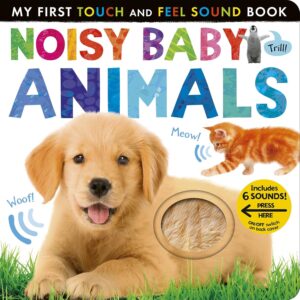 Combining tactile elements and animal sounds gives children several ways into the same learning experience. Touching and exploring the pages encourages controlled hand movements, while the sounds help children make connections between an animal, its picture and the noise it makes. Adults can help to extend this further: name the animal, make the sound, then wait for the child to respond or point. This repetition supports early communication and memory as well and adult-child bonding. And who can resist a cute puppy!
Noisy Jungle (Libby Walden)
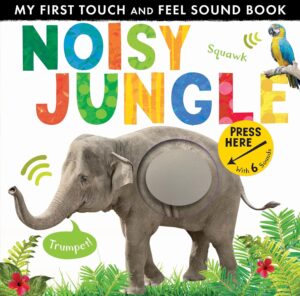 A particularly engaging sensory book for developing little hands and curious minds. Jungle animal sounds lead naturally to jungle animal impressions and off we go into play….
As with other books in this list, a child’s reaching, touching and pressing, while repeatedly naming the animal, helps build vocabulary and narrative patterning. This book works especially well when adults pause after each sound and give toddlers time to look, imitate or respond. It is packed with appealing photographs, fun facts, tactile textures and exciting animal sounds which make it easy for tired adults to connect with little ones through reading.
There you have it, my 12 best books for toddlers. If you have a pregnant friend or family member, a new niece, nephew or grandchild, or are a parent keen to support your child’s early learning and development, these books are a great place to start building your child’s first library.
READ NEXT:
- Best potty training books
- Books for preparing toddlers for a new baby
- Books for talking to children about big emotions
- Best books to teach children social skills (2-7yrs)
*This post contains affiliate links. That means that if you click through from this post and buy a book, the Positive Parenting Project will receive a small commission. There is no additional charge to you. This helps us to keep providing free content for our readers. For more info, see Disclosure Notice.

Leave a Reply